
Types of Hammers: 5 Hammers Every Trade Should Know and Their Uses
November 16, 2026
Learn the main types of hammers and their uses: mechanist, sledge, claw, rubber and chipping hammers, with tips on choosing the right size. Shop APT hammers in Dubai.
Walk onto any site or into any workshop in Dubai and you will find more than one hammer in the toolbox. That is because each hammer is built for a different job. Using the right one makes the work faster, gives a cleaner finish and is safer for the person swinging it. This guide explains the main types of hammers, what each one is used for and how to choose the right size, with examples from the APT range we stock at Safinat Group.
Why the type of hammer matters
A hammer is not just a weight on a stick. The head shape, face, weight and handle material decide what it can do well:
- Head weight controls how much force each blow delivers. Light heads give control; heavy heads do the work for you.
- Face material decides what you can hit. Hardened steel drives nails and punches, while rubber protects tiles and finished surfaces.
- Handle material affects comfort and durability. Wooden handles absorb shock well; fibreglass handles resist weather and are hard to break.
Using the wrong hammer can chip a tile, mushroom a chisel, bend a nail or tire your wrist in an hour. Here are five hammer types every trade should know.
1. Mechanist hammer (machinist's hammer)
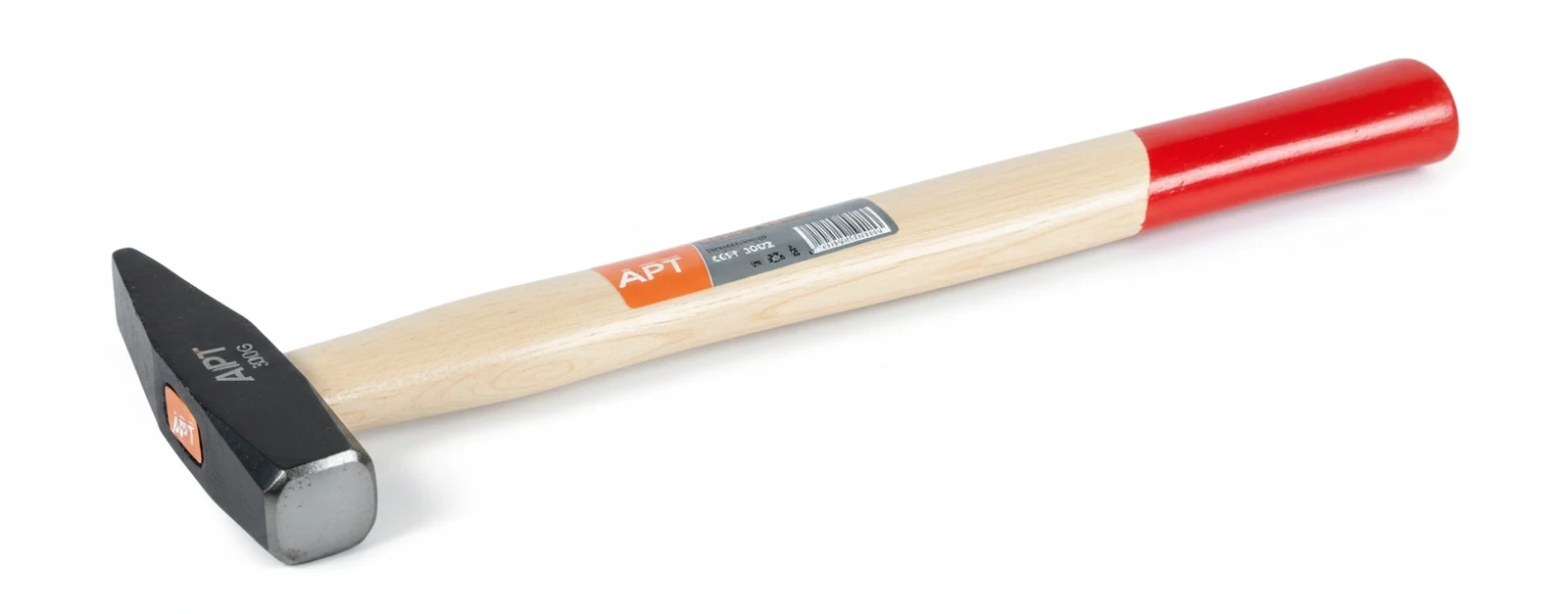
The mechanist hammer, often called a machinist's or engineer's hammer, has a flat striking face on one side and a rounded or tapered peen on the other. It is the standard hammer in metal workshops and garages.
Best for: striking punches and cold chisels, shaping and straightening sheet metal, fitting bearings and pins, and general vehicle and machinery repair.
Choosing a size: a 300 g head suits light work with punches and small pins. A 500 g head is the everyday all-rounder for most workshops. An 800 g head is for heavier chisel work and stubborn parts.
Tip: strike squarely with the flat face. Glancing blows damage the tool you are hitting and can send fragments flying, so wear safety glasses.
Shop the APT mechanist hammer (black head), available in 300 g, 500 g and 800 g.
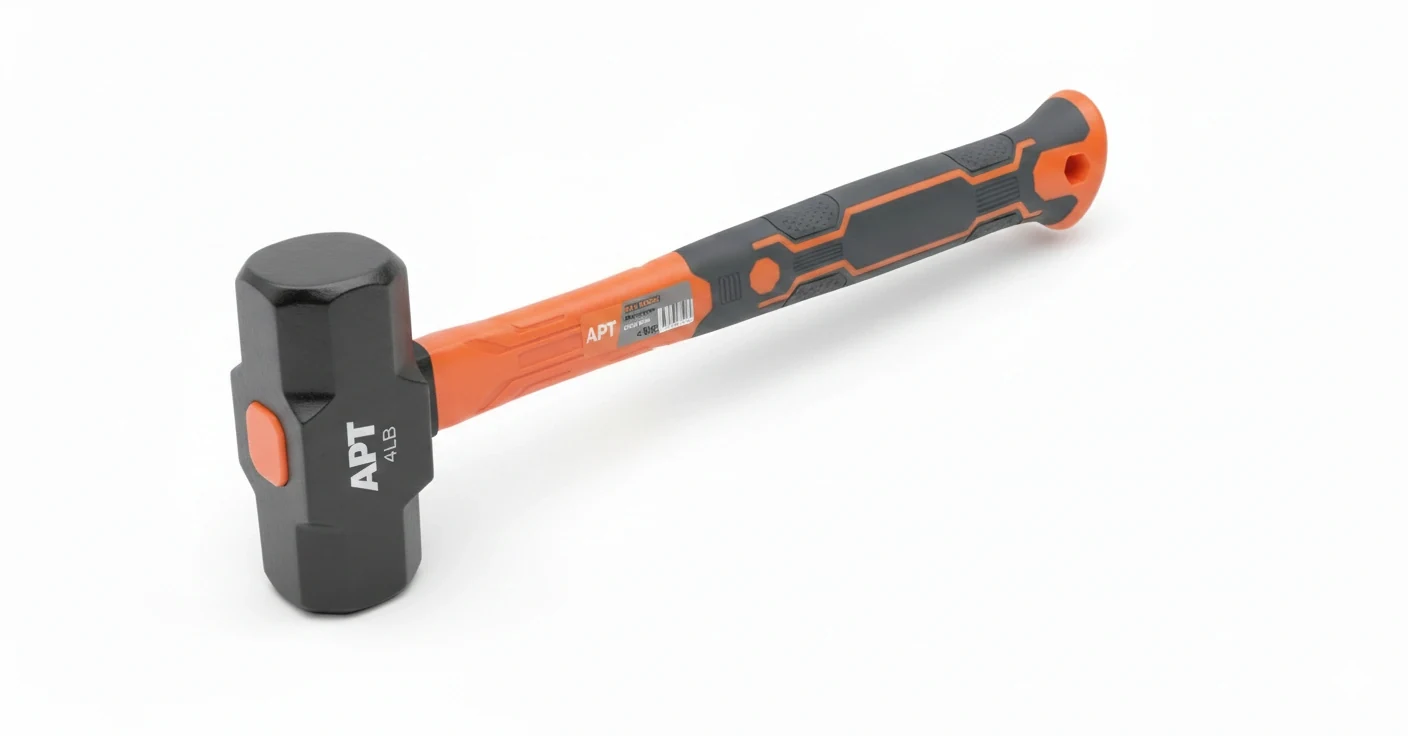
2. Sledge hammer with fibre handle
A sledge hammer has a heavy, double-faced steel head on a long handle. It is built for force rather than precision. A fibreglass handle is a smart choice for site use in the UAE: it does not dry out or crack in the heat, it resists moisture and it absorbs some of the shock that travels up to your hands.
Best for: breaking concrete and blockwork, demolition, driving stakes and pegs, and knocking heavy formwork or frames into position.
Choosing a size: 2 lb and 3 lb sledges (often called club or lump hammers) are used one-handed with chisels and for light demolition. 4 lb and 6 lb heads suit general site work. An 8 lb sledge is for heavy breaking and stake driving with two hands.
Tip: check that the head is tight on the handle before every use, keep a clear swing area and let the weight of the head do the work.
Shop the APT double face sledge hammer with fibre handle, available from 2 lb to 8 lb.
3. Claw hammer: wooden handle vs fibre handle
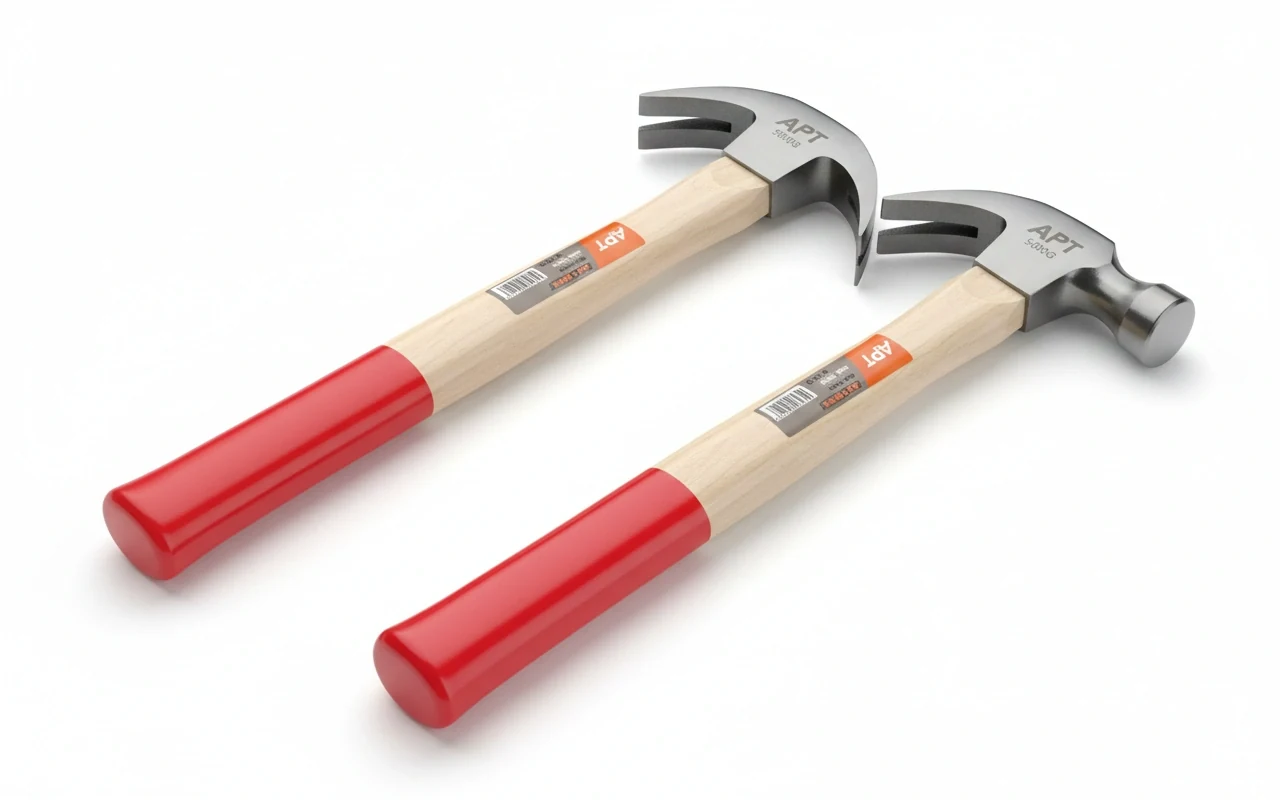
The claw hammer is the most recognised hammer in the world. One side of the head drives nails; the other side has a curved, split claw that grips and pulls them out. It is the go-to hammer for carpenters, joiners, shopfitters and maintenance teams.
Best for: driving and removing nails, carpentry, framing, formwork, furniture assembly and general repairs.
Wooden handle claw hammer
A wooden handle has a traditional feel and naturally absorbs vibration, so it is comfortable for long sessions of nailing. It is also light and well balanced. Keep it out of prolonged sun and rain so the wood does not dry out or loosen in the head.
Shop the APT claw hammer with wooden handle (16 oz).
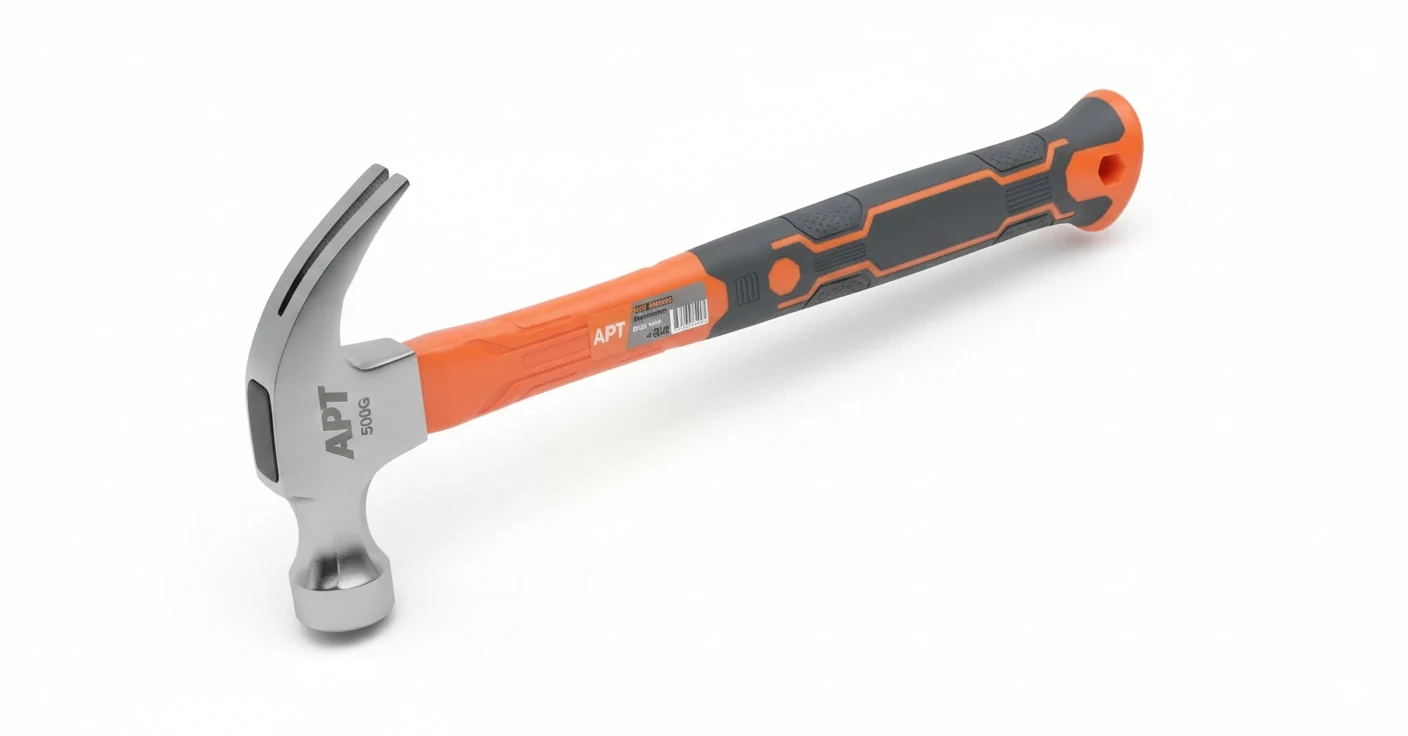
Fibre handle claw hammer
A fibreglass handle is stronger and more weather-resistant than wood, and it will not split if you miss a nail and hit the handle on the work. A rubber grip improves comfort and control. It is the better choice for outdoor sites and heavy daily use.
Shop the APT claw hammer with fibre handle (16 oz).
Choosing a size: 16 oz is the standard weight for most nailing and repair work. Go lighter for fine trim work and heavier for framing with large nails.
Tip: when pulling a nail, slide a small block of wood under the head. It gives you more leverage and protects the surface.
4. Rubber hammer (rubber mallet)
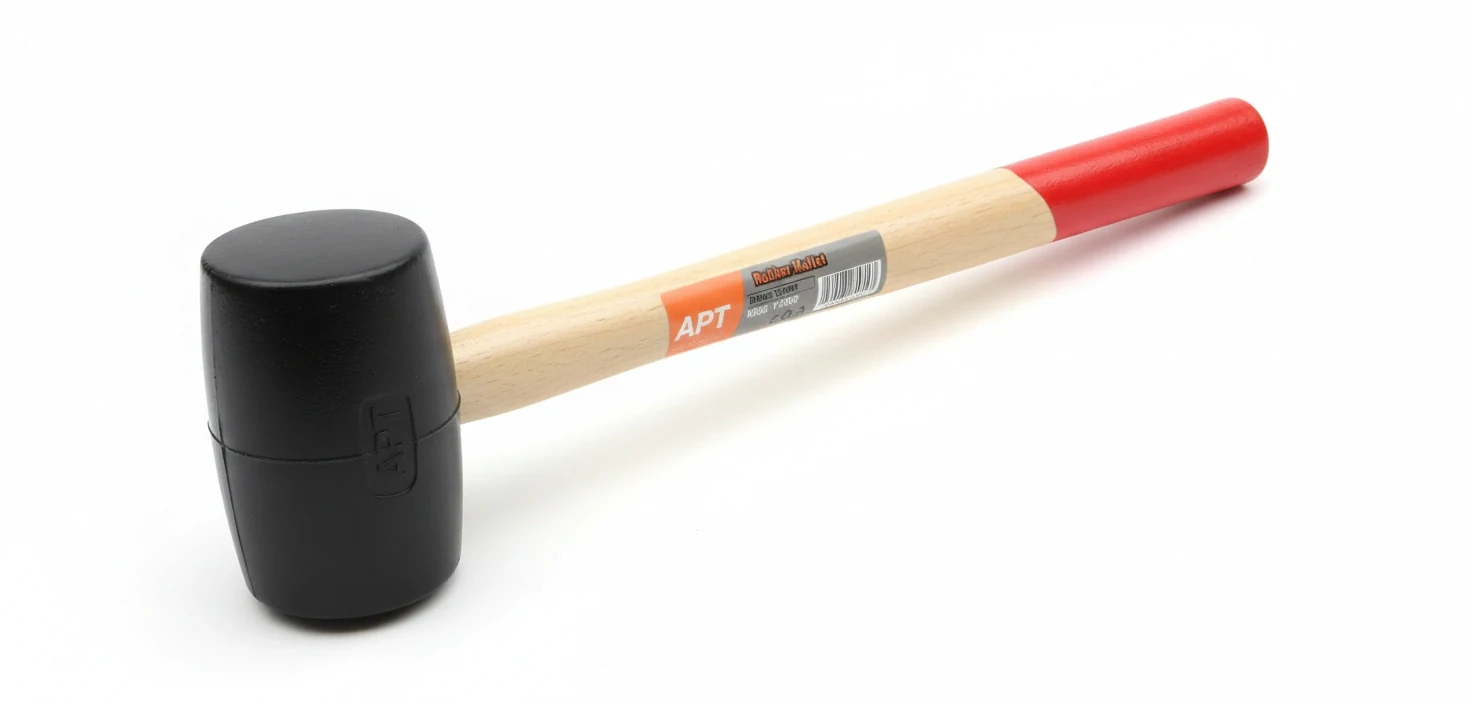
A rubber hammer, or rubber mallet, has a solid rubber head that delivers a firm but soft blow. It moves things into place without marking, cracking or denting them.
Best for: bedding floor and wall tiles, laying interlock pavers, assembling furniture and flat-pack, fitting panels and joints, and tapping parts together where a steel hammer would cause damage.
Choosing a size: 12 oz suits light tiling and furniture assembly. 16 oz is a good general choice. 24 oz is better for pavers and heavier tiles.
Tip: keep the rubber face clean. Grit stuck to the head can scratch polished tiles and finished surfaces.
Shop the APT rubber hammer with wooden handle, available in 12 oz, 16 oz and 24 oz.
5. Chipping hammer
A chipping hammer, also called a welder's chipping hammer or slag hammer, has a pointed tip on one end and a flat chisel edge on the other, usually with a spring or tubular handle that absorbs vibration.
Best for: removing slag from welds after arc (stick) welding, cleaning spatter from metalwork, and light chipping of scale and rust.
Tip: always wear safety glasses or a face shield. Hot slag can fly off at speed, so chip away from your body and let the weld cool slightly first.
Looking for a chipping hammer? Contact our sales team or browse our hand tools range.
Quick guide: which hammer do you need?
- Metalwork, punches and chisels: mechanist hammer.
- Demolition, concrete and stakes: sledge hammer with fibre handle.
- Nailing, carpentry and repairs: claw hammer (wooden handle for comfort, fibre handle for durability).
- Tiles, pavers and furniture: rubber hammer.
- Cleaning welds: chipping hammer.
Hammer safety tips
- Inspect the head and handle before use. Replace hammers with cracked handles or loose, chipped or mushroomed heads.
- Wear safety glasses for every striking job.
- Never strike two hardened steel hammer faces together.
- Grip the handle near the end for power and closer to the head for control.
- Use the hammer only for its intended job, and store it clean and dry.
Buy hammers in Dubai from Safinat Group
Safinat Group has supplied hardware and tools in the UAE since 1990. We stock APT hammers alongside a wide range of hand tools for carpenters, mechanics, tilers, welders and contractors. There is no minimum order quantity, trade pricing is available and delivery is guaranteed within 48 hours anywhere in the UAE once your order is confirmed.
Our sales team is available Monday to Saturday, 8:00 AM to 1:30 PM and 4:00 PM to 9:00 PM. Call or WhatsApp +971 50 899 5435.
FAQ: types of hammers
What are the most common types of hammers?
The most common hand hammers are the claw hammer, mechanist (machinist's) hammer, sledge hammer, rubber mallet and chipping hammer. Each is designed for a different task, from nailing to demolition to welding.
Which hammer is best for general home use?
A 16 oz claw hammer is the best all-round hammer for home use. It drives and removes nails and handles most small repairs and DIY jobs.
Is a fibre handle better than a wooden handle?
A fibre handle is stronger and resists heat and moisture, which makes it ideal for outdoor sites. A wooden handle absorbs vibration well and feels comfortable for long periods. Both are good choices; pick based on where and how often you work.
What is the difference between a mechanist hammer and a claw hammer?
A mechanist hammer has a hardened flat face and a rounded peen for striking punches and chisels and shaping metal. A claw hammer has a claw for pulling nails and is designed for woodwork. Do not use a claw hammer to strike hardened steel tools.
What size sledge hammer should I buy?
Choose a 2 lb to 3 lb sledge for one-handed chisel work, 4 lb to 6 lb for general site work, and 8 lb for heavy breaking and driving stakes.
Why use a rubber hammer instead of a steel hammer?
A rubber hammer moves tiles, pavers and furniture parts into place without cracking, chipping or marking them, which a steel hammer would do.